What Structural Steel Detailing Actually Involves
Structural steel detailing is the process of converting an engineer's design into the drawings and data a fabricator needs to cut, drill, weld and erect steel. The engineer specifies that a beam must carry a given load. The detailer determines the exact length of that beam, the size and position of every hole, the plates and bolts at each end, the weld sizes, the finish, the mark number and where it sits in the erection sequence.
That gap is wider than most people outside the industry expect. A structural engineer's drawing set might run to thirty pages. The structural steel detailing package produced from it can run to several hundred, because every individual piece of steel needs its own drawing and every connection needs to be resolved to the millimetre.
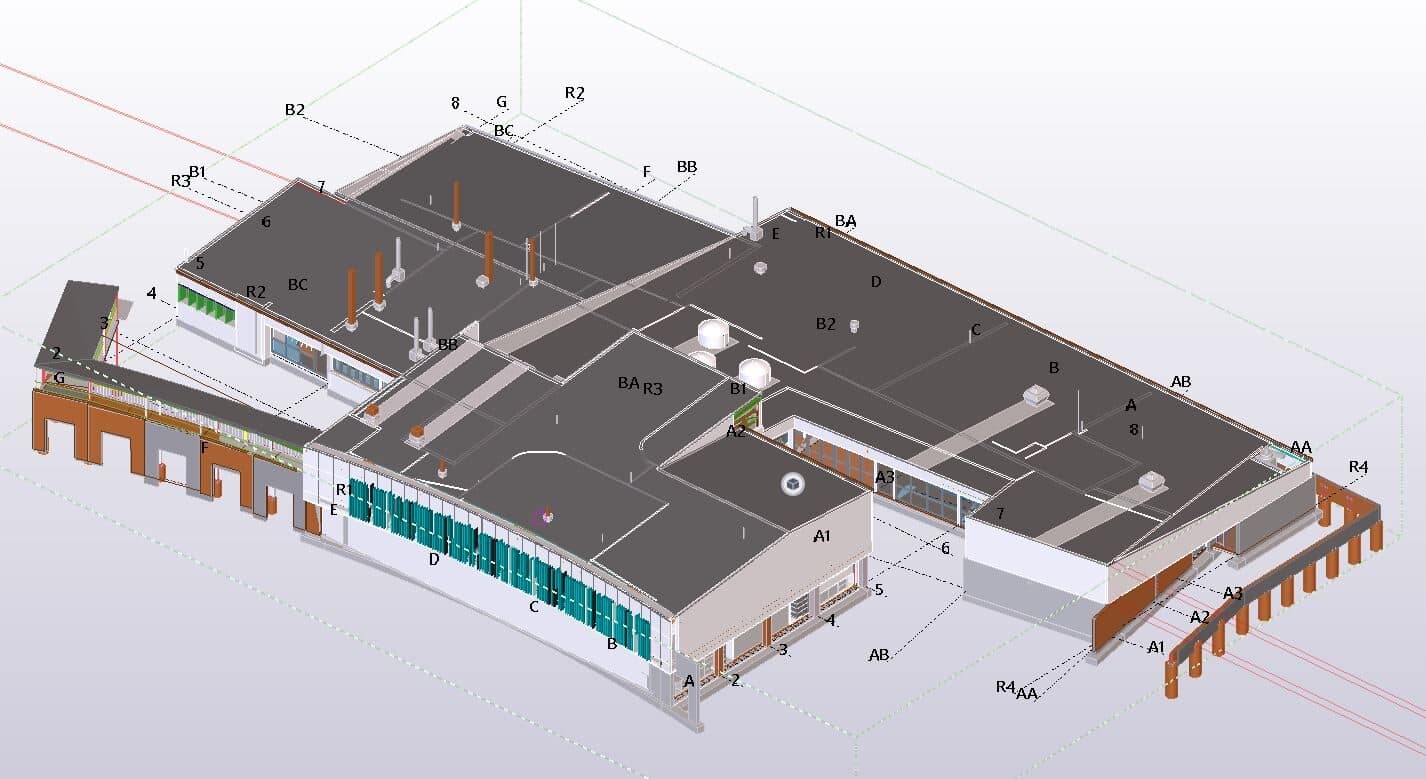
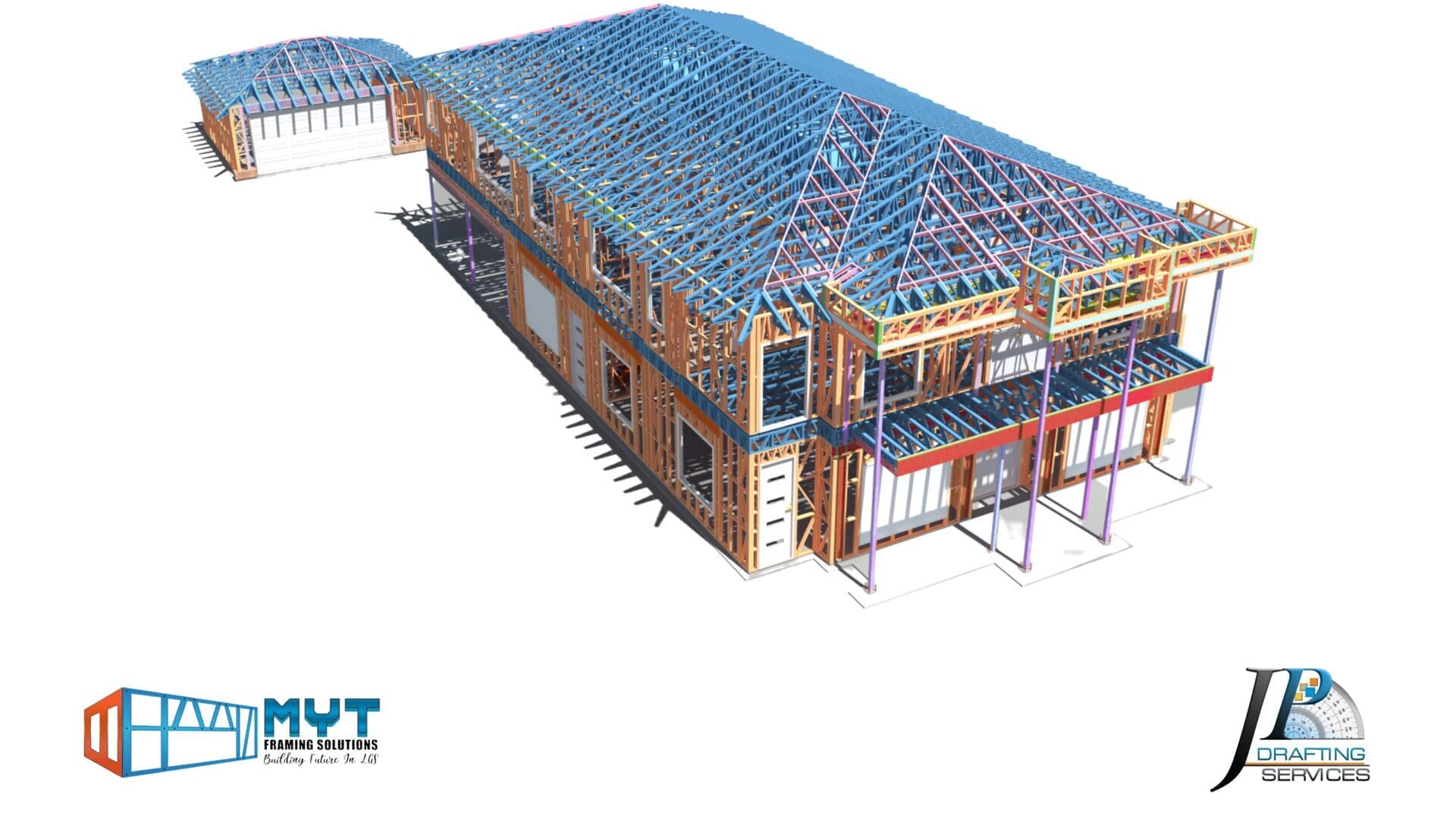
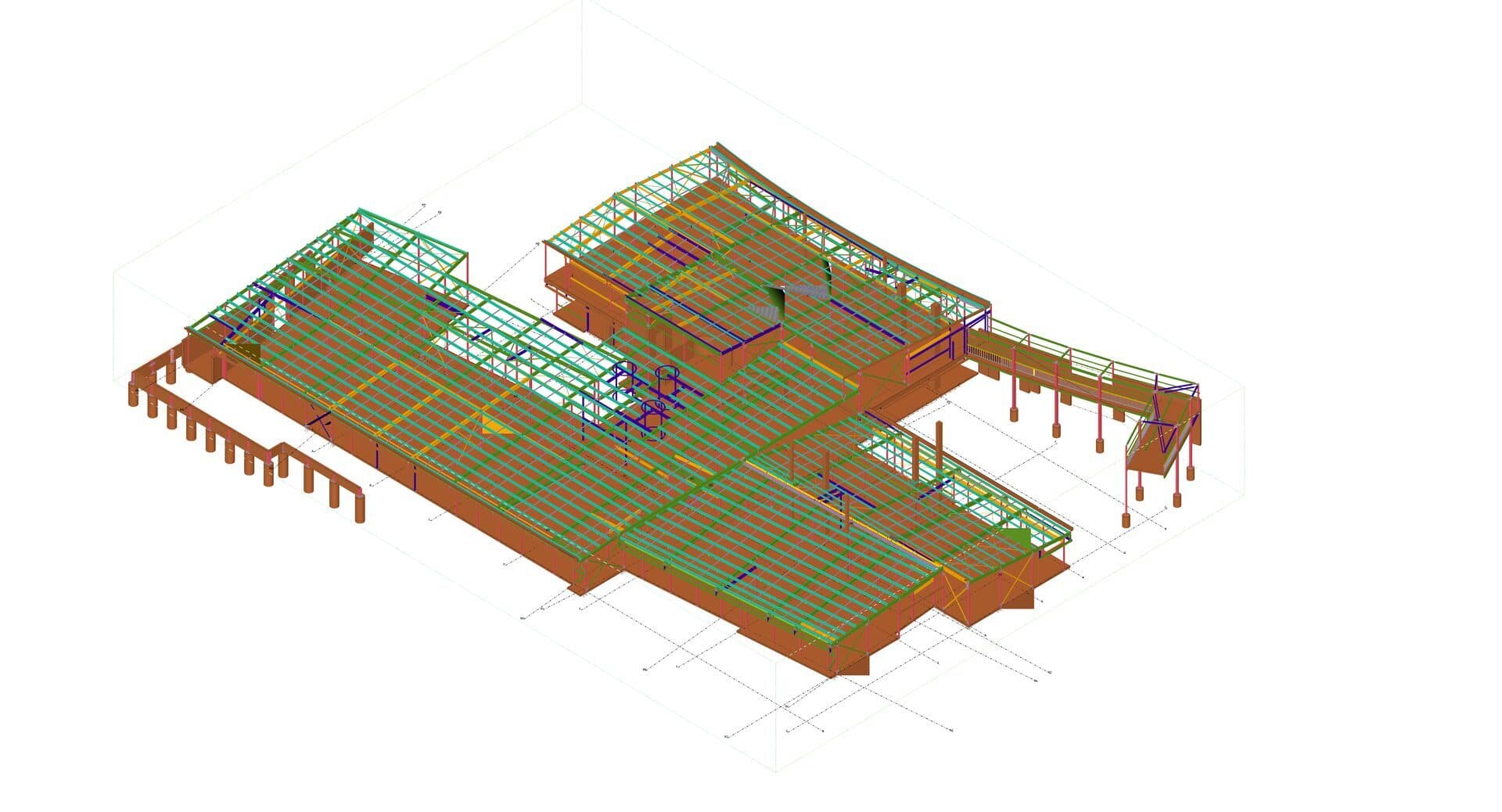
Modern structural steel detailing is done by building a complete three dimensional model of the structure first, then extracting drawings from that model. The model becomes the single source of truth. When a beam changes, every drawing, bolt list and report that references it updates together, which removes an entire category of coordination error that plagued the drawing board era.
Why Structural Steel Detailing Decides Whether a Job Runs Smoothly
Detailing sits at the point of maximum leverage in a steel project. An hour spent resolving a clash on screen costs a fraction of what the same clash costs when a crane is standing by and a beam does not fit.
The financial asymmetry is stark. Rework on site typically involves hot work permits, access equipment, a delayed crew and a knock-on effect to every trade that follows. A single mis-drilled connection on a multi-storey job can absorb more margin than the entire detailing fee for that package.
- Fabrication efficiency. Clean structural steel detailing feeds CNC equipment directly, so beamlines and plate processors run without an operator re-entering dimensions.
- Erection sequence. Marking plans and erection drawings tell the site crew what lands where and in what order, which compresses crane time.
- Procurement accuracy. Bills of material generated from the model let you order steel and fasteners once, at the right lengths, with predictable offcut.
- Clash resolution. Problems surface during modelling, when the fix is a mouse click rather than an oxy torch.
The Structural Steel Detailing Process Step by Step
A well run structural steel detailing package follows a predictable sequence. Understanding it helps you know what to ask for and when to expect it.
1. Scope review and information check
The detailer reviews the engineering drawings, architectural set and specification, then flags what is missing before any modelling starts. Missing grid dimensions, unspecified connection types and undocumented finishes are far cheaper to resolve at this point than halfway through.
2. Three dimensional modelling
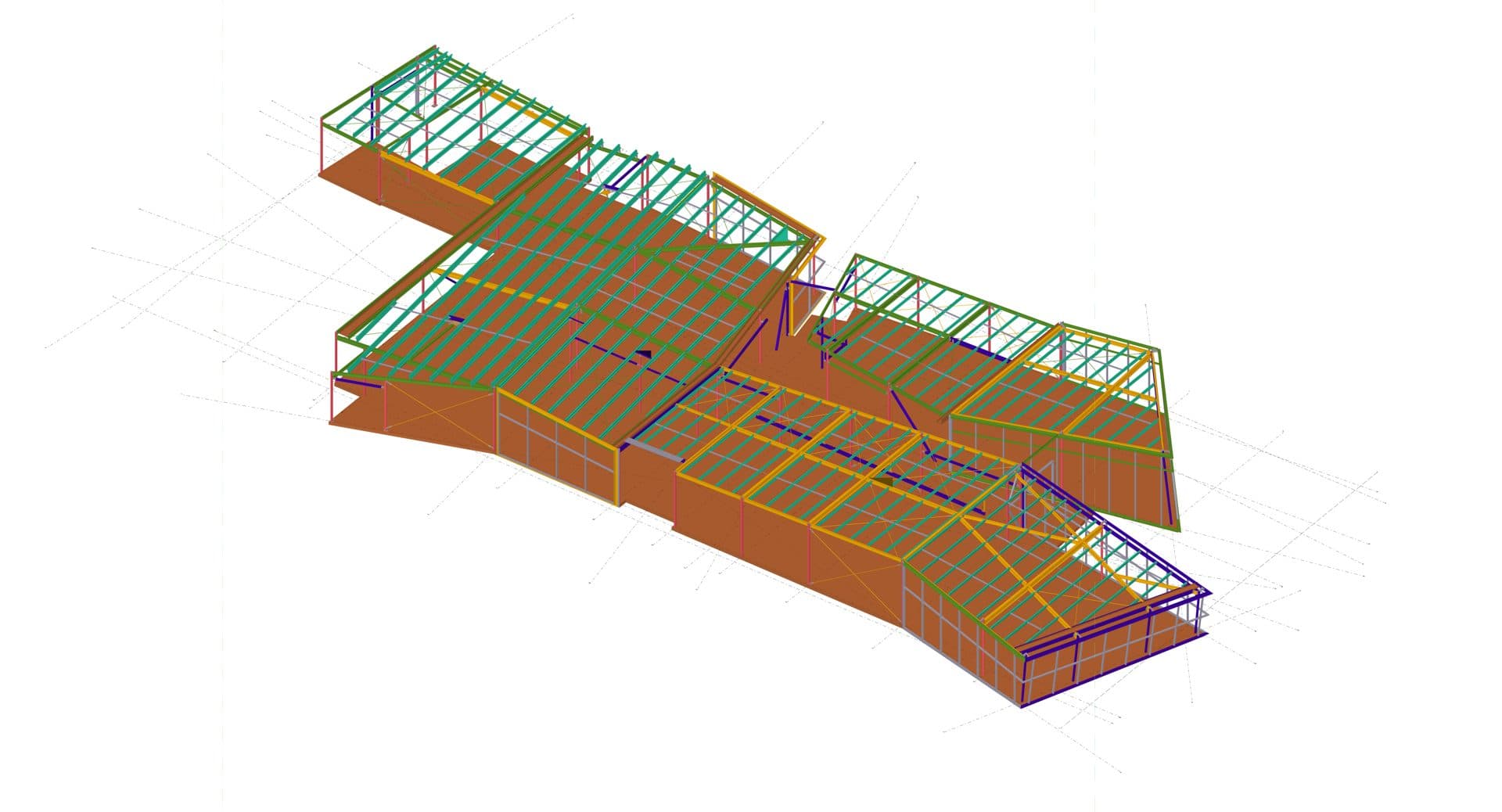
Every member, plate, bolt and weld is modelled in position. Because the model is geometrically real, clashes between steel and other trades become visible immediately rather than on site.
3. Connection detailing
Connections are developed to suit the engineer's design actions and the fabricator's preferred methods. A workshop with an automated beamline and limited welding capacity wants a different connection philosophy from one with skilled boilermakers and manual drilling.
4. Checking
A second detailer checks the model and drawings independently. This step is the one most often compressed under deadline pressure and the one that most reliably prevents expensive errors.
5. Approval and issue
Drawings go to the engineer for review, comments are incorporated, and the package is issued for fabrication with a clear revision history.
Structural Steel Detailing Deliverables You Should Receive
If you are commissioning structural steel detailing, this is the deliverable set to expect. Anything missing should be a conversation before you sign.
| Deliverable | What it is for |
|---|---|
| Assembly drawings | Each shop-welded assembly with all its components, dimensions and welds |
| Single part drawings | Every individual plate, cleat and member for cutting and drilling |
| Marking and erection plans | Where each mark sits in the structure and the order it is erected |
| NC and DXF files | Machine data driving beamlines, plate processors and laser cutters |
| Bolt lists | Fastener quantities by grade, diameter and length for procurement |
| Bill of materials and weights | Steel ordering, transport planning and progress claims |
| IFC or BIM export | Coordination with architects, engineers and other trades |
Australian Standards That Govern Structural Steel Detailing
Structural steel detailing in Australia is not a matter of preference. It sits inside a framework of standards that determine what is acceptable, and a competent detailer works to them by default.
- AS 4100 Steel Structures. The design standard that governs how steel structures behave and, by extension, what connections must achieve.
- AS/NZS 5131 Structural steelwork fabrication and erection. Sets construction categories and the fabrication and erection requirements that flow from them.
- AS/NZS 1554 Structural steel welding. Governs weld categories, procedures and inspection.
- AS 1100 Technical drawing. The drawing conventions that make a package readable by anyone in the industry.
The Australian Steel Institute publishes connection design guides and standing committee guidance that most Australian fabricators treat as the practical reference alongside the standards themselves. If a detailer cannot tell you which construction category to AS/NZS 5131 a package has been detailed to, that is a meaningful warning sign.
Software Behind Modern Structural Steel Detailing
Two platforms dominate structural steel detailing in Australia, and the choice affects what you can expect downstream.
Tekla Structures is the industry benchmark for constructible models. Every member, bolt and weld is modelled, and drawings plus NC data are extracted straight from the model. It handles very large and complex structures without degrading, which is why most multi-storey and industrial packages are modelled in it.
Advance Steel sits inside the Autodesk ecosystem and integrates tightly with AutoCAD, which suits workshops already standardised on Autodesk tooling. For most portal frame and mid-scale commercial work the two platforms produce equivalent outcomes.
Structural Steel Detailing Mistakes That Cost Fabricators Money
Across more than four hundred completed packages, the same failures recur. Most are process failures rather than technical ones.
- 01Starting before the information is complete. Modelling against a superseded engineering revision guarantees rework. Confirm the revision status in writing before work begins.
- 02Detailing connections the workshop cannot build efficiently. A technically correct connection that requires awkward access or unusual welding positions slows fabrication every time it repeats.
- 03Ignoring transport and erection constraints. An assembly that cannot be transported legally or lifted safely is a design that failed to consider the whole chain.
- 04Skipping the independent check. Self-checking finds a fraction of the errors an independent reviewer finds.
- 05Poor revision control. When the workshop fabricates from a superseded drawing the cost lands on the fabricator, not the detailer.
- 06Under-communicating assumptions. Every assumption the detailer makes should be visible to the engineer, not buried in a model.
- 07Treating holding down bolts casually. Base plate and holding down bolt setout errors are discovered after concrete has cured, which makes them among the most expensive of all.
How to Choose a Structural Steel Detailing Partner
Price per tonne is the easiest thing to compare and the least useful. These questions separate a detailing partner from a drawing vendor.
- Will you work to our templates, numbering and layer standards, or will we receive drawings in yours?
- Who checks the package, and is that person independent of the person who modelled it?
- What construction category to AS/NZS 5131 are you detailing to?
- Can you supply NC data in the format our beamline actually reads?
- How are engineering revisions during the package handled commercially?
- Can we see a complete sample package from a project of similar complexity?
At JP Drafting Services we work as an extension of your team, adopting your standards rather than imposing ours. You can see the full scope of our structural steel detailing service, or review the projects we have documented across commercial, education and industrial sectors.
Structural steel detailing FAQs
How long does structural steel detailing take on a typical project?
A single-span portal frame package can be modelled, checked and issued inside a week. A mid-size commercial job of one hundred to two hundred tonnes typically runs three to five weeks depending on connection complexity and how quickly engineering queries are answered. The variable that most affects programme is rarely modelling speed, it is the turnaround on requests for information and approval cycles.
What is the difference between structural steel detailing and connection design?
Connection design is an engineering activity that determines the capacity a connection must achieve and is certified by the engineer. Structural steel detailing takes that design and resolves it into buildable geometry: exact plate sizes, hole positions, weld sizes and bolt specifications. Some detailers offer connection design as a separate certified service, but the two responsibilities should always be clearly allocated in writing before work starts.
How much does structural steel detailing cost in Australia?
Most Australian detailing is quoted either per tonne or as a fixed fee for a defined scope. Rates vary widely with complexity, because a tonne of repetitive portal frame carries far less detailing effort than a tonne of architecturally exposed steelwork with bespoke connections. Ask for a fixed quote against a specific drawing revision, and clarify how variations arising from engineering changes will be charged.
What information does a steel detailer need to start work?
At minimum: the current structural engineering drawings with revision status, the architectural set for coordination, the project specification covering finishes and welding requirements, and any connection design already completed. Your preferred templates, numbering convention and NC file format should be supplied at the same time so the package is set up correctly from the first drawing.
Can structural steel detailing be outsourced without losing quality?
Yes, provided the outsourcing arrangement is set up around your standards rather than the detailer's. The practices that protect quality are the same regardless of location: an independent checker, adoption of your templates and numbering, clear revision control, and direct access to the detailer rather than an account manager. Quality problems in outsourced detailing almost always trace back to weak process rather than distance.
Related services